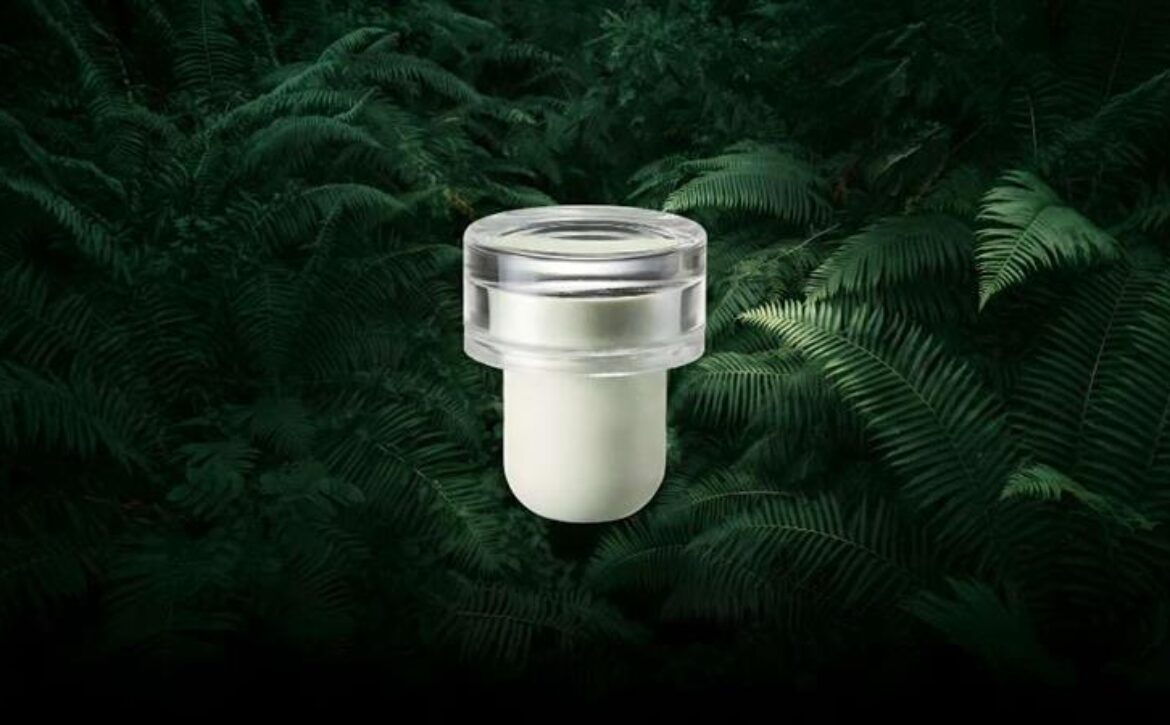
Tapì Group advances sustainable PMMA solutions through collaboration with Trinseo

A small material evolution enabling a meaningful step toward circularity

Tapì Group continues its journey toward more responsible materials by introducing a new PMMA solution with recycled content into its premium closure portfolio. Developed in collaboration with Trinseo, a global materials solutions provider, this initiative reflects Tapì’s ongoing commitment to sustainability—delivered without compromising design integrity, performance, or manufacturing reliability.

Starting in 2024, Tapì, thanks to its partnership with Trinseo, began integrating ALTUGLAS™ R-LIFE™ VML-H CR50 into selected premium closures. This next-generation PMMA contains 50% chemically recycled content obtained through a depolymerization process, contributing to a reduced environmental impact while preserving the optical clarity, surface quality, and technical properties expected in high-end packaging applications.

“We’re proud to support our customers’ sustainability goals. Partnering with Tapì, a like-minded leader in closure packaging, is a natural fit.” says Aldo Zanetti, Global Sustainability Business Leader at Trinseo.

A pragmatic approach to responsible innovation

Headquartered in Campodarsego, Italy, Tapì Group designs and manufactures premium and super-premium closures for the spirits, wine, food, and beauty markets worldwide. Across these sectors, materials must meet exceptionally high standards—not only in terms of aesthetics, but also consistency, safety, and performance throughout the product lifecycle.

For Tapì, sustainability is not pursued through disruptive shortcuts or experimental compromises. Instead, the company focuses on solutions that can be realistically implemented within existing industrial processes, ensuring continuity, scalability, and reliability for both Tapì and its customers. The introduction of a chemically recycled PMMA aligns with this philosophy: a responsible evolution that fits seamlessly into established production flows.

A close partnership with Trinseo

To translate this opportunity into an industrial reality, Tapì partnered with Trinseo, leveraging its expertise in PMMA and chemical recycling technologies. The collaboration benefited from geographical proximity, with Trinseo’s depolymerization demonstration facility located in Rho, Italy, approximately 200 km from Tapì’s headquarters, enabling efficient technical exchange and joint development. This approach reflects Tapì’s focus on integrated and transparent supply chains, allowing the new PMMA to be aligned with existing operational requirements and introduced without major process changes or requalification. For Tapì, depolymerization represents a credible pathway toward PMMA circularity while maintaining the quality and performance required in premium applications. The resulting material delivers the same optical quality, surface finish, and processing behavior as fossil-based PMMA, while reducing environmental impact through recycled content, offering brand owners a practical solution to improve packaging sustainability without altering design or functional expectations.

Looking ahead

This partnership represents another step in Tapì Group’s broader strategy to rethink materials through a circular and responsible lens. By integrating chemically recycled PMMA into its portfolio, Tapì reinforces its long-term vision: developing packaging solutions that respect both the product they protect and the world in which they exist.

A small tweak in material choice, when guided by intention and collaboration, can become a meaningful shift toward a more sustainable future.

Tapì Group introduces more sustainable synthetic closures using Bornewables™ EVA and Queo™ plastomers from Borealis

A new step toward sustainability — with no compromise on performance or design

Tapì Group has developed a new generation of more sustainable synthetic corks, integrating renewable polymers from Borealis into its production process.
This innovation allows Tapì to maintain the look, feel, and technical performance that define its premium closures, while significantly reducing their carbon footprint — without changing existing production technologies.

A path toward more responsible innovation

Headquartered in Campodarsego, Italy, Tapì Group designs and manufactures premium and super-premium closures for the beverage, food, wine and beauty markets worldwide.

Among its wide range of solutions are synthetic corks made from foamed polymers, a reliable alternative to natural cork increasingly chosen by producers seeking consistency and supply stability — particularly in the white and brown spirits segments.

Driven by its commitment to responsible innovation, Tapì Group set out to make its synthetic closures more sustainable. The goal: to reduce the environmental impact of its products while maintaining exceptional quality, safety, and sensory neutrality.

Finding the right material

The challenge was to identify a renewable polymer that would meet Tapì’s strict standards for food contact, softness, taste and odor neutrality, and processability — all essential to ensuring the performance and consumer experience expected from Tapì closures.

Conventional mechanically recycled materials could not meet these criteria, as they are typically unsuitable for food-contact applications and lack the elasticity required for synthetic corks. Tapì therefore looked for a certified renewable solution that could deliver equivalent properties and seamlessly integrate into existing processes.

The partnership with Borealis

To meet this challenge, Tapì Group partnered with Borealis, a leading supplier of advanced and circular polyolefins. Together, the teams explored solutions that could align with Tapì’s sustainability goals without requiring technical compromises.

The collaboration led to the adoption of Bornewables™ EVA and Queo™ plastomers, part of Borealis’ portfolio of ISCC PLUS certified bio-based polymers made from renewable feedstocks such as used cooking oil.

These materials are chemically identical to fossil-based polymers, offering the same performance and processability — but with a significantly reduced carbon footprint. Because they behave as drop-in alternatives, Tapì was able to integrate them directly into its existing production setup without costly adjustments or requalifications.

“Our aim has always been to combine technical excellence with environmental responsibility.” says Domenico Liberati, Chief Product Development Officer at Tapì Group.

“Thanks to the Bornewables™ portfolio, we can now offer our customers a closure that meets their sustainability targets while preserving the aesthetics and reliability that define Tapì’s products.”

Performance without compromise

Currently at pre-commercial stage, the new closures offer the same visual and tactile quality as Tapì’s traditional synthetic corks, with the added benefit of a lower carbon footprint and full recyclability.

For spirit brands seeking to make their packaging more sustainable, this solution provides a practical and immediate path forward — one that aligns with global sustainability objectives while maintaining Tapì’s hallmark of innovation, craftsmanship, and quality.

“We’re proud that Tapì Group selected the Bornewables™ portfolio to help reduce the carbon footprint of its polymer-based corks.” says Paulo Cavacas, Head of Marketing Advanced Products at Borealis.

“This collaboration perfectly reflects our We4Customers strategy — working closely with partners like Tapì to deliver sustainable solutions that achieve progress without trade-offs.”

Toward a more circular future

This collaboration represents another milestone in Tapì Group’s continuous journey toward sustainable materials and circular design. By integrating renewable feedstocks into its polymer-based closures, Tapì reinforces its long-term vision: to create closures that not only preserve what’s inside the bottle, but also respect the world outside it.